At Tracy Community Connections Center (TCCC), we focus on long-term solutions, and one of the most effective tools we have is case management.
Case management is at the heart of how people experiencing homelessness or housing insecurity get from surviving to rebuilding. Without it, even the best intentions fall flat. You can hand someone a meal or a blanket, but if they don’t know where they’re sleeping tomorrow, or how to get ID, or access medical care, they’re stuck in survival mode. Our case managers help people move forward.
More Than a Referral
A case manager isn’t just someone who gives out a list of phone numbers. At TCCC, our case managers get to know each client, including what they’ve been through, what they need, and what obstacles are in the way. Then we create a real plan with goals, support, and follow-through.
We don’t expect someone in crisis to navigate ten agencies, five forms of ID, and hours of red tape. That’s how we help. We help clients make it to appointments, fill out applications, advocate for them when systems are hard to navigate, and check in regularly. Progress is tracked. Barriers are addressed. No one has to do it alone.
Stability Beyond Handouts
Giving someone a tent or a hygiene kit feels good and helps in the short-term, but if you want to see lasting change, we need to address the root causes of housing insecurity: trauma, unemployment, eviction, illness, addiction. These don’t get solved with quick fixes. Case management provides someone in your corner that you can trust, with the time and experience to help.
Our case managers connect people to housing programs, job resources, health services, legal aid, or whatever it takes. And because TCCC has long-standing relationships with our clients, we can spot changes early and pivot when needed.
We sit down with every client and hear their story. Our case managers work with them to identify their barriers to housing – whether that be employment, mental health, or addiction. Then, the case managers will work side by side with the client to create a housing plan by addressing these barriers. They meet with the client regularly and identify what programs or funding we have that could address the barriers, and refer out to other agencies for needs we cannot meet. Our case managers work with our street outreach team to coordinate services in real time like transportation, getting prescriptions, or getting into the city shelter. TCCC also offers bilingual Spanish-speaking case management for those who need it.
Funding Case Management
We have seen the positive impact of case management for unhoused individuals and we know that it works. The way to make it even more effective is with funding, staff, and more community awareness. Case management is slow, gritty, behind-the-scenes work but it’s what moves people from the streets to stability.
If you want to make a real difference in Tracy, support organizations like ours offering long-term case management by donating or volunteering. And if you or someone you know is stuck, please reach out.
When you see someone experiencing homelessness in your community, it’s natural to want to help. But knowing what actually helps, and what might unintentionally do more harm than good, can be difficult to figure out. At Tracy Community Connections Center (TCCC), we work every day with individuals experiencing homelessness, and we’ve learned what makes the biggest difference.
Here’s what we want the Tracy community to know:
Start With Respect and Connection
Before anything else, remember this: unhoused people are just people. They are parents, veterans, workers, neighbors. Many are dealing with trauma, disability, or situations completely outside their control. One of the simplest things you can do is acknowledge their humanity with a smile, a conversation, or just treating them with the same dignity you’d want for yourself.
If you’re considering giving money directly to someone, know that it’s a personal decision, but in the long run, it’s more impactful to support local organizations that are already doing the work. Groups like TCCC have the relationships, the case management tools, and the experience to address not just today’s need but the root causes.
Partner with Organizations That Know the Work
We get it – you want to hand out hygiene kits, blankets, or snacks. And yes, those things can help in the moment. But it’s even better to coordinate with people who know who needs what, and when.
At TCCC, we already deliver emergency supplies to our clients and know their health histories, vulnerabilities, and specific situations. Partnering with us, or with other local programs, means your donation or time goes where it’s actually needed.
Show Up For the Long Haul
Real change takes more than handouts – it takes sustained support. Here are a few ways you can show up for the long run:
Donate to local nonprofits like TCCC who are doing direct outreach every day.
Volunteer at one of the local churches that provide free meals every night of the week in Tracy.
Attend the Tracy Homeless Advisory Committee (THAC) meetings and learn how city decisions impact homelessness. View THAC meetings here »
Get Involved Smartly
Want to help more? Donate supplies or funds to local service providers. Volunteer your time at organizations like TCCC, Interfaith Ministries, or El Concilio. Not sure where to start? Just ask us. We’re happy to connect you to the right place.
If you’re interested in hosting a fundraiser or organizing a drive, talk to us first, so that you know you’re collecting the items that are most in demand.
Using Your Voice and Your Platform
Educating others is powerful. Posting well-researched facts on social media can debunk myths, as does speaking out at organized awareness campaigns in schools or workplaces. But the message needs to spread further than your friends and neighbors. Reach the people and places that can really make a difference by asking local nonprofits how you can help. Contact your local legislators and city council members to ensure they represent the needs of their community.
Involve Your Kids (With Care)
Teaching children about empathy is important, and getting them involved in service is a great way to do that. With TCCC’s guidance, you can organize a donation drive with your family or encourage kids to write kind notes for care packages. Just remember: not every nonprofit can allow kids on-site, so check ahead before planning any in-person volunteering.
We’re Here to Help Without Judgment
If you’re reading this because you or someone you love is struggling, know that you are not alone. TCCC is here to connect you to every available resource, with compassion and without judgment. We’ll help you figure out what you qualify for and walk alongside you as you take the next step.
Want to get involved? Call us or stop by our office to learn how you can make a real difference, right here in Tracy.
When you cross paths with people experiencing homelessness, you might wonder: How can I actually help?
At Tracy Community Connections Center (TCCC), we work directly with our unhoused neighbors, and we’ve learned what truly makes a difference. If you want to help, here’s what we urge you to keep in mind.
DO: Connect People to Local Resources
Handing someone a dollar or a snack might help in the short term, but the most meaningful support comes from connecting people to long-term resources. Tracy Community Connections Center offers case management, help with IDs, disability and Medi-Cal applications, rental assistance, free showers, laundry, and connections to medical care, mental health services, and housing options.
If you meet someone in need, refer them to us. Our office is located on 95 W. 11th Street, and we’re open Monday–Friday. Giving someone a card, address, or even offering to help them get to our office can change their path.
DON’T: Assume You Know Their Story
It’s easy to jump to conclusions: They just don’t want to work.They’re dangerous.They’re addicts. The reality is far more complex. Many of the people we serve at TCCC became homeless after job loss, medical debt, eviction, or escaping unsafe relationships. Others struggle with mental health conditions without proper care.
Instead of judging or making assumptions, approach every person with dignity. Remember, you only see a snapshot of their life.
DO: Prioritize Safety and Boundaries
If you want to help, do it in a way that’s safe for both you and the person you’re supporting. Give food, water, hygiene supplies, or information, but don’t invite strangers into your home or give out personal details. If someone needs emergency assistance, like shelter, medical help, or mental health crisis support, call TCCC or local services for guidance.
DON’T: Give Large Sums of Cash
This might feel controversial, but we’re direct about it: cash is not always the best way to help. While it might meet an immediate need, it often doesn’t connect people to the long-term services they need to exit homelessness.
Instead, consider donating to organizations like TCCC. Your contributions go directly toward motel stays, food deliveries, transportation to appointments, and case management that changes lives.
DO: Treat People Like People
Say hello. Make eye contact. Acknowledge someone’s presence. One of the biggest things our clients tell us is how invisible they feel – passed by, ignored, treated like a nuisance.
A moment of connection, even just a “Good morning,” can restore a bit of dignity. That human recognition matters.
DON’T: Go It Alone
Addressing homelessness is not something you can solve on your own. It takes a network of services, organizations, volunteers, donors, and community advocates.
If you’re serious about helping, get involved. Volunteer at TCCC. Donate supplies. Spread the word about our services. Advocate for affordable housing in Tracy. Together, we can build a stronger, more compassionate city.
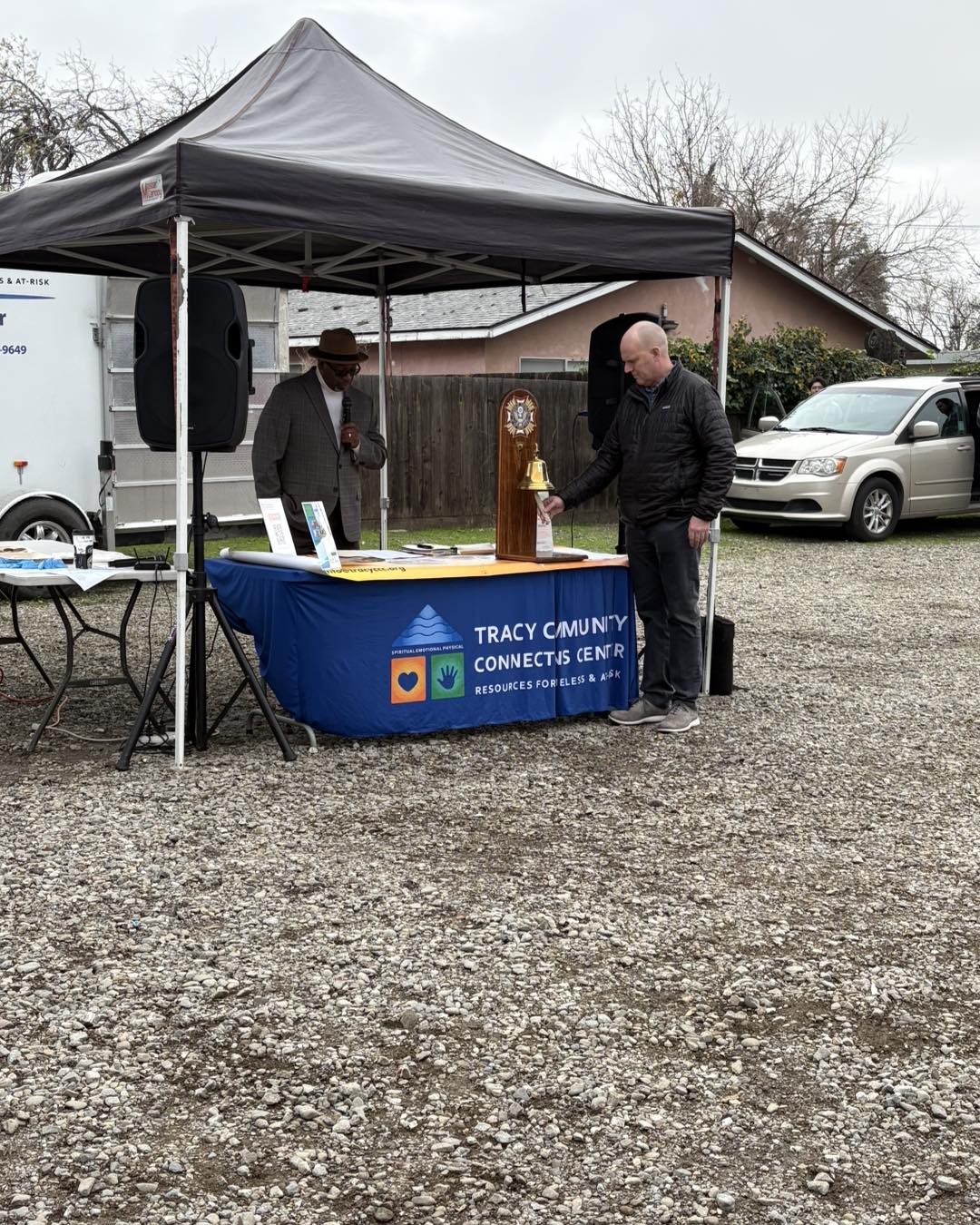
On the first day of winter, Tracy Community Connections Center (TCCC) paused our outreach work to honor community members who died while experiencing homelessness in Tracy.
We gathered behind New Heart Church on Bessie Avenue on Saturday, December 21, 2024. TCCC staff, volunteers, and neighbors prayed, and heard the names of 44 people we lost in 2024, read by Pastor Patrick Williams. For each name spoken, there was also a story underneath of hopes deferred, of challenges unseen, of a neighbor we never had the chance to serve fully.
This was the first of what we plan to make an annual event. For reasons ranging from chronic illness to lack of safe shelter, the 44 people we honored lost their lives to homelessness over the last 5 years. By gathering together and remembering the losses, we emphasize the importance of empathy, respect, and making connections with every human life.
Remembering Stories: Homelessness isn’t a statistic – it’s lived experience. By reading each name, we remind ourselves that behind every life lost was a person with dreams, struggles, and dignity.
Building Community: The memorial draws volunteers, faith leaders, business owners, and public officials. It’s a stark reminder that tackling homelessness is everyone’s responsibility.
Recommitting to Action: This event isn’t an endpoint—it’s a spark. In the days after, our outreach team ramps up efforts to connect more people to our housing navigation, medical recuperative care, and hygiene services.
Join Us If you’d like to attend next year’s memorial or help us expand our outreach, visit tracyccc.org/get-involved or call us at (209) 407-9649.
Winter in Tracy doesn’t bring snowstorms or below-zero temperatures, but don’t let the milder weather fool you. For people living outdoors, winter is brutal. Cold nights, biting winds, rain, and damp clothes create dangerous conditions, especially for those with health issues. At Tracy Community Connections Center (TCCC), we see firsthand how winter multiplies the risks for our unhoused neighbors.
So what does winter outreach really look like here? It’s more than handing out blankets. It’s survival work.
Staying Alive on Cold Nights
Every winter, we distribute critical supplies including blankets and warm coats, in partnership with One Warm Coat. These are not nice-to-have items; they are lifelines. Wet clothing, especially for those with chronic illnesses, can lead to hypothermia — even in California’s relatively mild climate.
Our team hits the streets, visiting camps and known gathering spots. We check on people, assess their condition, and offer immediate help. When temperatures drop or storms come in, we work to place the most vulnerable to city warming centers and transport those in need to city shelter as needed. But space is limited, and we triage constantly: who’s at the highest risk tonight?
Connection and Trust
Outreach is not just about delivering supplies. It’s about building relationships. Many of the people we help have struggled with healthcare, housing, and social services. They’ve learned not to trust promises. That’s why consistent, regular outreach matters.
At TCCC, we see familiar faces, week after week, month after month. We offer food, hygiene kits, and conversation. Over time, people begin to open up. That’s when we can step in with case management: getting someone connected to medical care, applying for benefits, helping with ID replacement, or finding a spot in transitional housing. But none of that happens without trust.
What the Community Can Do
Winter is the season when community support matters most. We would love donations of coats, hand warmers, blankets, hats, and gloves. We also provide some Christmas gifts to families with children as needed. We need volunteers willing to help pack supply kits or assist with food deliveries. And we need advocates – people who will speak up for more resources, more shelter space, and long-term housing solutions in Tracy.
If you see someone in need this winter, don’t just walk by. Offer information about TCCC’s services. Donate directly to organizations doing the work. And remember: winter may pass, but the need for support continues year-round.