2026 Homelessness Point-in-Time Count Shows Progress, But More Work Remains

Every two years, communities across California participate in the Point-in-Time (PIT) Count & Report, a federally required effort to better understand homelessness in our region. The results help guide funding decisions, identify community needs, and measure whether local programs are making a difference.
The newly released 2026 San Joaquin County Homelessness Point-in-Time Count (view the full PDF at the bottom of this post) offers both encouraging news and important reminders about the challenges that still exist. At Tracy Community Connections Center (TCCC), we see these realities every day through our outreach, case management, housing navigation, and homelessness prevention programs.
There Is Good News
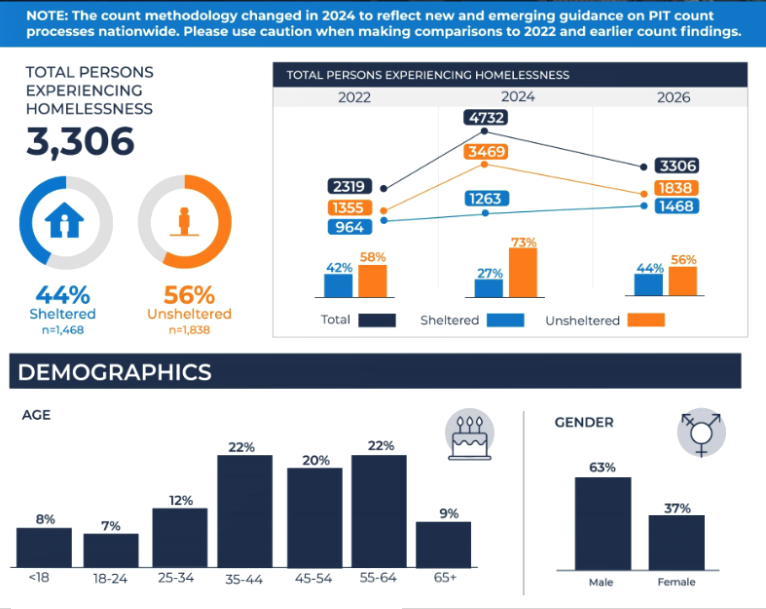
One of the most encouraging findings is that overall homelessness in San Joaquin County decreased compared to the 2024 count. While there is still significant work ahead, this suggests that the combined efforts of nonprofits, local governments, housing providers, volunteers, and community partners are making an impact.
The report also found a decrease in the number of veterans experiencing homelessness. Veterans often face unique challenges after military service, and continued collaboration between veteran service organizations, housing providers, and local nonprofits appears to be helping more veterans access stable housing and support.
These improvements remind us that homelessness is not an impossible problem. With the right resources, partnerships, and long-term commitment, positive change is possible.
Most People Experiencing Homelessness Are Already Part of Our Community
One statistic that stands out in this year’s report challenges a common misconception. Many people assume that individuals experiencing homelessness moved here from somewhere else. In reality, the report shows that the overwhelming majority of people experiencing homelessness were already living in San Joaquin County before they lost their housing.
These are our neighbors. They’re people who grew up here, worked here, raised families here, attended our schools, or lived in our communities for years before experiencing a financial crisis, job loss, illness, or another life-changing event. Understanding this helps shift the conversation from “outsiders coming in” to recognizing that homelessness often affects people who were already part of our local community.
The Biggest Barriers Are Economic
Another important takeaway from the report is what people identified as the primary obstacles to finding permanent housing. The leading barriers were overwhelmingly economic, including:
- High housing costs
- Low wages
- Lack of affordable housing
- Insufficient income to cover rent and living expenses
This is significant because it challenges another common stereotype that homelessness is primarily caused by drug use or mental illness. While behavioral health and substance use can absolutely affect some individuals and deserve compassionate treatment, the Point-in-Time Count shows that the most commonly reported barriers to housing are financial. For many people, the math simply doesn’t work. Rent continues to rise while wages struggle to keep pace.
Why Prevention Matters
These findings reinforce something we’ve talked about before on our blog: preventing homelessness is often more effective than responding after someone has already lost their housing.
When someone receives help before an eviction, connects with housing resources early, or works with a case manager during a financial crisis, they may never have to experience homelessness in the first place. At TCCC, we work every day to provide case management, housing navigation, eviction prevention assistance, resource referrals, street outreach, and connections to healthcare and community services. Every successful intervention represents someone who has a better chance of remaining safely housed, or returning to stable housing more quickly.
The 2026 Point-in-Time Count offers reasons for optimism while also reminding us that affordable housing and economic stability remain major challenges throughout San Joaquin County. Progress is happening, but it takes continued collaboration between nonprofits, local governments, businesses, volunteers, donors, and community members to keep moving in the right direction. Every person who finds stable housing, every veteran who receives support, and every family that avoids homelessness represents meaningful progress for our community. At Tracy Community Connections Center, we’re grateful to be part of that work every day, and we’re committed to continuing to serve our neighbors with compassion, dignity, and hope.